%20(2).png)
When an employee leaves an organization, the most obvious challenge is the open position they leave behind. Their responsibilities need to be reassigned, their workload needs to be covered, and eventually, someone new may need to step into the role.
What is harder to replace is everything that was never written in the job description.
Maybe they were the only person who fully understood a complicated reporting process. Maybe they knew why a system was configured a certain way, had years of history with an important client or vendor, or understood the small details that kept a monthly process running smoothly. That knowledge builds over time, and organizations often do not realize how valuable it is until the person who has it is no longer there.
For accounting, finance, and IT teams, that can turn what looks like a staffing issue into a much larger business continuity risk.
Every organization has people who become the go-to person for certain questions. They know where information lives, understand how a process really works, and can usually solve a problem without needing much explanation. Having experienced employees like that is valuable, but relying too heavily on one person can also create risk.
In accounting, it could be the person who knows every step of the close process or understands the history behind certain reconciliations. A finance leader may own forecasting models, board reporting, or important relationships across the business. Within IT, one employee may have years of knowledge about system configurations, integrations, security processes, or legacy technology that is difficult to learn from documentation alone.
As long as those employees are there, the risk can be easy to overlook. The problem becomes much more noticeable when someone announces they are leaving and the team realizes just how much knowledge has been concentrated with one person.
If the answer to an important process question is consistently, "Ask them. They're the only one who knows," that is worth paying attention to long before a resignation happens.
────────────────────────
A job description can help identify the skills and responsibilities needed in a replacement, but it cannot capture years of company-specific knowledge.
A new Controller may have excellent technical accounting experience but still need time to understand the organization's close process, systems, controls, reporting requirements, and team dynamics. A new IT leader may bring exactly the right technical background but will not immediately know the history behind every integration or why certain technology decisions were made. Even an experienced CFO stepping into a new organization needs time to understand the business, leadership priorities, financial models, and the context behind previous decisions.
That is what makes losing a key employee different from simply having an open position. The vacancy may be filled, but rebuilding the knowledge that left with the previous employee takes time.
This is particularly important as organizations continue facing talent challenges. The Controllers Council's 2026 Corporate Finance & Accounting Talent Study found that finance and accounting organizations continue to experience talent shortages even as hiring activity increases. Its 2026 CFO and Controller research also identified talent retention and recruitment as the leading concern among surveyed finance leaders. For organizations already operating with specialized teams, losing an experienced employee can put even more pressure on the people who remain.
────────────────────────
There is never a perfect time to lose an important employee, but some departures create more immediate pressure than others.
Heading into the final months of the year, accounting teams are preparing for close, reconciliations, audit readiness, and reporting deadlines. Finance leaders are moving deeper into forecasting, budgeting, and planning for the year ahead. IT teams are supporting the systems behind those processes while continuing to manage cybersecurity, infrastructure, user needs, and major technology initiatives.
Losing someone critical during that period can affect much more than their individual workload. Responsibilities often shift to other employees who already have full plates, important projects can lose momentum, and leaders may find themselves stepping back into day-to-day work simply to keep everything moving.
That is why succession and knowledge planning should not be limited to executive positions. Any role that owns a critical process, system, relationship, or area of expertise can create a gap when that knowledge is concentrated with one person.
────────────────────────
The best time to think about knowledge transfer is before someone gives notice.
That does not mean documenting every task an employee completes. It means identifying the processes and responsibilities the business cannot afford to lose and making sure that knowledge is shared. Cross-training employees, maintaining current process documentation, reviewing system access, assigning backup ownership, and having clear succession plans for critical roles can all make transitions easier.
It is also worth looking at where your organization may already have key-person risk. If a process stops when one employee takes vacation, if only one person understands a system, or if important information lives primarily in someone's inbox or memory, there is an opportunity to strengthen that area now.
These steps cannot replace years of experience, but they can prevent a departure from becoming a disruption.
────────────────────────
Of course, not every transition comes with months of notice and a perfect handoff. Employees leave unexpectedly, business needs change, and organizations sometimes have to determine the next step while still keeping critical work moving.
The immediate answer does not always have to be rushing into a permanent hire. Depending on the situation, an interim leader can provide stability while an organization searches for the right long-term replacement. A consultant can take ownership of an important project or process, provide specialized expertise, or help relieve pressure on the existing team. In other situations, beginning a permanent search immediately may be the best solution.
What matters is understanding what the business actually lost. Was it primarily capacity? Leadership? Technical expertise? Institutional knowledge? Or a combination of all four?
Answering that question first can help organizations make a better decision about what kind of support they actually need instead of simply trying to fill an empty seat as quickly as possible.
────────────────────────
Organizations cannot prevent every employee from leaving, nor should the goal be to make any one person irreplaceable. The goal is to build teams and processes that can continue moving forward when change happens.
That starts by recognizing that talent is more than a headcount number. The people within accounting, finance, and IT carry knowledge that affects how decisions are made, how systems operate, how deadlines are met, and how the business moves forward. Protecting that knowledge should be part of planning for the future, not something organizations begin thinking about after a resignation letter arrives.
When a key employee does leave, the strongest organizations are not necessarily the ones that replace them the fastest. They are the ones that understand what was lost, protect the priorities that cannot slow down, and make a thoughtful decision about what the business needs next.
────────────────────────
Losing a key employee can create an immediate gap, but it does not have to disrupt everything around it. Having the right plan and support in place can help maintain critical operations while your organization determines the best path forward.
Whether you need interim leadership, project-based consulting, or help finding the right long-term talent, Pinnacle works with accounting, finance, and IT leaders to understand what their teams need today while helping them prepare for what comes next.
Connect with Pinnacle to start the conversation.
.avif)
For more updates and industry perspectives, follow us on LinkedIn or continue exploring our website.
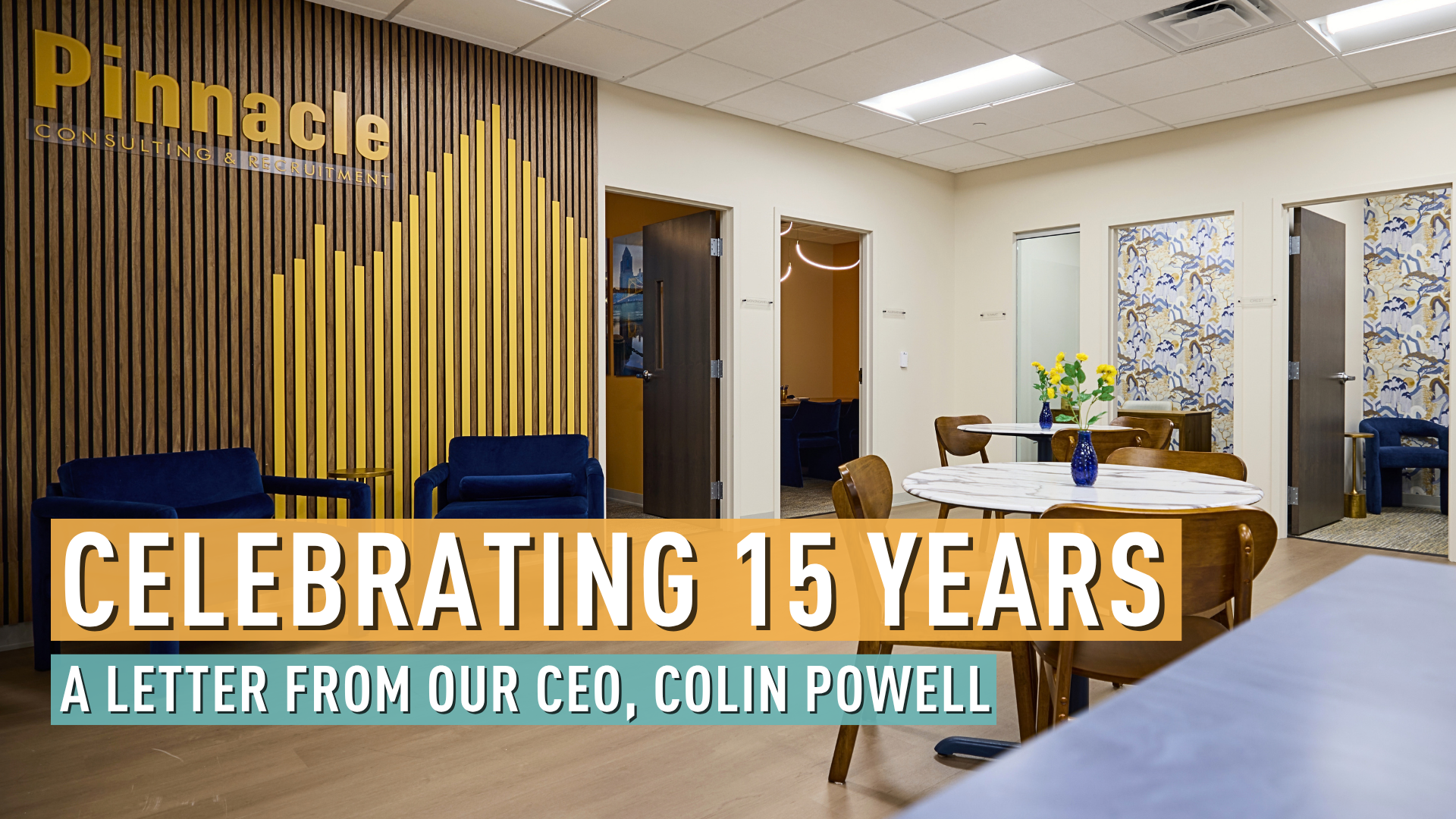
As Pinnacle celebrates 15 years, Founder and CEO Colin Powell reflects on the people, relationships and community that have shaped the company since 2011, and why those connections remain what he’s most proud of.
.png)
Hiring isn't always the problem. Many organizations have every position filled but still struggle to keep projects moving and workloads under control. Here's why capacity matters just as much as headcount, and what leaders can do before small challenges become bigger ones.
%20(3).jpg)
The halfway point of the year is more than a milestone. It's an opportunity to evaluate priorities, assess team capacity, and make adjustments before Q3 and Q4 accelerate. Here's what accounting, finance, and IT leaders should be thinking about now to finish the year strong.
.png)


.png)


.png)

.png)
.png)

.png)
.png)


.png)


Explore our services and connect with us to see how we can support your hiring needs. Let Pinnacle help you build the team that drives your success!