

In 2026, most organizations aren’t struggling to find applicants. They’re struggling to make decisions.
Across accounting, finance, and IT, hiring processes have become longer and more layered. More stakeholders. More rounds. More benchmarking. On paper, that sounds thorough. In reality, it often creates operational drag that shows up in places leaders don’t immediately measure.
This isn’t about rushing hiring decisions. It’s about understanding the hidden cost of waiting.
————————————————————————————————————————————————————————
When an accounting manager, controller, or technical accounting role stays open, the workload doesn’t pause.
Month-end close still happens. Audit timelines stay fixed. Financial reporting expectations don’t move.
What we typically see during extended finance hiring cycles:
Gallup research continues to highlight the connection between employee burnout and decreased productivity. In accounting and finance teams operating with limited headcount, even one prolonged vacancy can shift a department from strategic to reactive.
The longer the gap, the harder it becomes to regain momentum.
————————————————————————————————————————————————————————
IT hiring delays create a different type of pressure, one that often shows up in project timelines.
ERP implementations stall. System integrations take longer. Cybersecurity initiatives lose speed.
According to workforce reports from LinkedIn Talent Solutions and Robert Half, specialized technology roles consistently rank among the most difficult and time-intensive to fill.
While organizations search for the right IT hire, internal teams are balancing daily support with long-term transformation work. Innovation slows. Technical debt grows. Strategic initiatives shift into maintenance mode.
The cost is rarely immediate, but it compounds quickly.
————————————————————————————————————————————————————————
Several factors are influencing extended hiring timelines:
None of these are unreasonable on their own. But together, they lengthen time-to-fill for both finance and IT roles.
And time-to-fill has operational consequences.
————————————————————————————————————————————————————————
Organizations navigating finance hiring and IT hiring effectively in 2026 are not necessarily rushing decisions. They are protecting coverage.
That often means implementing a blended talent strategy that includes:
Interim Accounting and Finance Consulting
Temporary controllers, senior accountants, or technical specialists who stabilize reporting, support audit, or assist with ERP transitions.
IT Project-Based Consulting
ERP consultants, cybersecurity professionals, system integration specialists, or infrastructure experts who keep implementation timelines intact.
Parallel Permanent Hiring
Continuing a thoughtful permanent search without placing operational strain on internal teams.
Consulting is not a replacement for permanent hiring. It is a strategic tool that protects performance while long-term decisions are made.
————————————————————————————————————————————————————————
Instead of asking, “Can we wait to hire?”
The more strategic question is, “What is waiting costing us?”
Because while salary is visible on a budget line, operational slowdown is harder to measure.
It appears in:
In many cases, short-term consulting support costs less than the cumulative impact of stalled execution.
————————————————————————————————————————————————————————
Finance and IT teams are under increased pressure to deliver precision, efficiency, and measurable performance. Talent strategy directly impacts that outcome.
If your organization is evaluating whether to continue a prolonged hiring process or introduce interim consulting support, a strategic conversation can clarify which approach best protects your business objectives.
Hiring decisions should be thoughtful. But they should also protect momentum.
————————————————————————————————————————————————————————
Whether you need interim consulting, project-based IT support, or a strategic permanent hire, we’ll help you determine the right solution.
.avif)
For more updates and industry perspectives, follow us on LinkedIn or continue exploring our website.
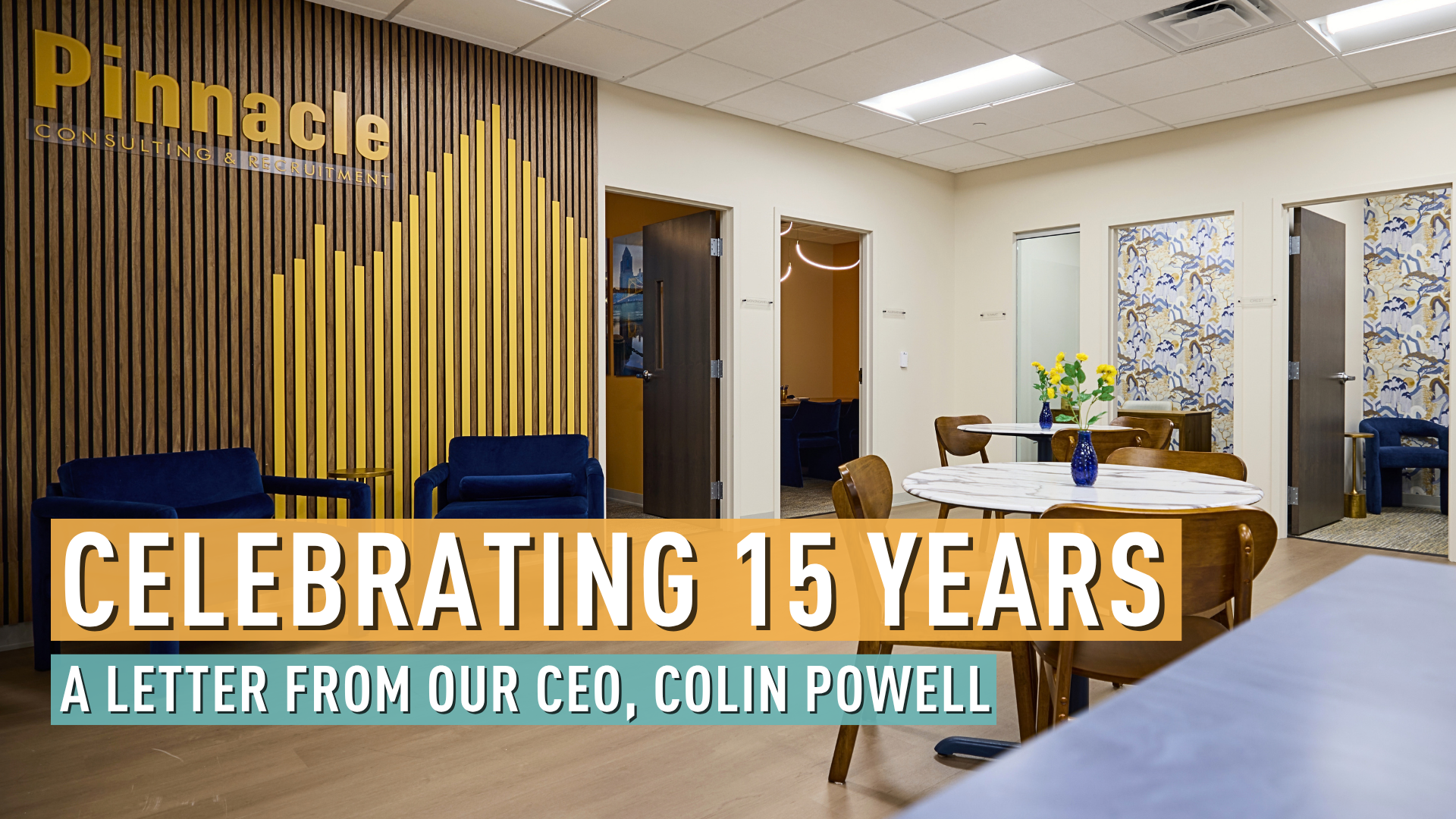
As Pinnacle celebrates 15 years, Founder and CEO Colin Powell reflects on the people, relationships and community that have shaped the company since 2011, and why those connections remain what he’s most proud of.
%20(2).png)
When a key employee leaves, organizations can lose much more than a person. Years of knowledge about processes, systems, relationships, and business decisions can leave with them. For accounting, finance, and IT leaders, protecting that knowledge is an important part of maintaining business continuity, especially as year-end approaches.
.png)
Hiring isn't always the problem. Many organizations have every position filled but still struggle to keep projects moving and workloads under control. Here's why capacity matters just as much as headcount, and what leaders can do before small challenges become bigger ones.


.png)


.png)

.png)
.png)

.png)
.png)


.png)


Explore our services and connect with us to see how we can support your hiring needs. Let Pinnacle help you build the team that drives your success!