

As organizations prepare for 2027, planning shouldn't only focus on what comes next. It's also an opportunity to rethink outdated practices that may be holding teams back. Here are five habits finance and IT leaders should reconsider to improve efficiency, strengthen their teams, and make better business decisions in the year ahead.
As the end of 2026 approaches, many organizations are already looking ahead to next year. Budgets are being finalized, projects are being prioritized, and leadership teams are evaluating what they need to accomplish their goals. While much of this planning focuses on new initiatives and investments, it's also worth taking a closer look at what organizations should stop doing.
Some processes and habits may have worked well in the past but no longer make sense for the way businesses operate today. Whether it's delaying important hiring decisions, investing in technology without the right expertise, or measuring project success only by deadlines, these practices can make it harder for accounting, finance, and IT teams to move forward.
Recent research from AICPA & CIMA and the Project Management Institute (PMI) highlights several challenges organizations continue to face. As leaders prepare for 2027, here are five practices worth reconsidering.
────────────────────────
When the economy is uncertain, organizations often become more cautious about hiring. While being mindful of costs is important, putting workforce planning on hold can create challenges when business needs change or critical positions become vacant.
According to the AICPA & CIMA Q3 2026 Economic Outlook Survey, 33% of surveyed executives reported having too few employees, up from 28% in the previous quarter. The availability of skilled personnel also remained among the top challenges facing organizations.
These findings reinforce the importance of planning for workforce needs even when the economic outlook is unclear. For accounting, finance, and IT teams, waiting until a position becomes vacant or a major project begins can put unnecessary pressure on existing employees.
Instead of approaching hiring only when an immediate need arises, leaders should regularly evaluate the roles, skills, and resources their organizations will need in the months ahead. This includes identifying critical positions, preparing for potential transitions, and considering whether permanent employees or consulting support make the most sense for upcoming priorities.
Workforce planning doesn't have to mean hiring more people right away. It's about understanding what your business needs and having a plan in place before those needs become urgent.
────────────────────────
Technology continues to be a major priority for finance and IT leaders, especially as organizations explore opportunities to improve efficiency through automation, artificial intelligence, and data analytics. However, investing in new technology is only part of the equation.
The AICPA & CIMA Future-Ready Finance Survey found that 88% of surveyed finance and accounting professionals expected AI to significantly impact the profession over the following 12 to 24 months. Despite that expectation, only 8% considered their organizations very well prepared for emerging technology trends.
The research also identified a lack of skills and talent as a major barrier to technology adoption. This highlights a challenge many organizations face: having access to new tools doesn't automatically mean employees have the knowledge or resources to use them effectively.
For example, implementing a new financial reporting platform may help streamline processes, but only if the team understands how to use it and the organization has a clear plan for adoption. The same applies to automation initiatives, ERP improvements, and other technology investments that require collaboration between finance and IT.
As organizations evaluate technology priorities for 2027, they should also consider the expertise needed to support those investments. Whether that means additional training, bringing in specialized consultants, or hiring professionals with new technical skills, the people behind the technology are just as important as the tools themselves.
────────────────────────
As responsibilities continue to evolve, employees need opportunities to develop the skills that will help them succeed. Unfortunately, professional development is often one of the first priorities pushed aside when workloads increase or budgets become tight.
CIMA's Mind the Skills Gap 2025 research found that 79% of surveyed UK small and medium-sized employers recognized skills gaps within their organizations. At the same time, 82% of surveyed employees expressed an interest in professional development. Although the study focused on UK businesses, it highlights the importance of helping employees build the skills organizations increasingly need.
For accounting and finance professionals, those skills may include financial analysis, automation, forecasting, and the ability to provide more strategic business insights. IT professionals are also navigating changing expectations as organizations adopt new technologies, strengthen cybersecurity, and modernize their systems.
When development is consistently pushed to the bottom of the priority list, organizations risk falling behind as the skills required for important roles continue to change.
Professional development doesn't always require a large investment or formal training program. Cross-training, mentorship, hands-on projects, and opportunities to work with experienced professionals can all help employees expand their capabilities. The important part is making development an ongoing priority rather than something that only happens when time allows.
────────────────────────
Whether an organization is implementing a new ERP system, upgrading its IT infrastructure, or improving financial processes, major projects rarely happen without challenges. Even with a clear timeline and defined goals, unexpected issues can arise as different departments, systems, and responsibilities come together.
According to PMI's Pulse of the Profession 2026, 81% of surveyed project professionals said projects have become more complex in recent years. The research also found that 31% of complex projects failed to achieve the full scope of their originally intended benefits.
For finance and IT leaders, these findings are an important reminder that project success depends on more than having a timeline and assigning responsibilities. Organizations also need to consider how projects will affect daily operations, whether employees have the right expertise, and what additional resources may be needed along the way.
A finance transformation project, for example, may require accounting employees to balance implementation responsibilities with month-end close and reporting deadlines. An IT modernization initiative may involve multiple systems, departments, and vendors, creating dependencies that are difficult to manage without the right coordination.
As leaders prepare their 2027 project plans, taking time to evaluate potential challenges early can help prevent delays later. That may mean adjusting timelines, clarifying responsibilities, identifying risks, or bringing in specialized support to help internal teams manage more complex work.
────────────────────────
Completing a project on time and within budget is important, but those results don't always tell the full story. A project can meet every deadline and still fall short of delivering the improvements the organization originally expected.
PMI's Pulse of the Profession 2025 found that projects managed by professionals with high business acumen met their business goals 83% of the time, compared to 78% among other respondents. The research emphasizes the value of understanding how individual projects contribute to broader business objectives.
For accounting, finance, and IT leaders, that means looking beyond whether an initiative was completed and evaluating what it actually accomplished.
Did a new reporting process save time or improve accuracy? Did an ERP implementation make financial information easier to access? Did an IT upgrade improve reliability, reduce manual work, or create a better experience for employees?
These are the types of questions that help organizations understand whether their investments are delivering meaningful value. As 2027 approaches, leaders should make sure project goals include measurable business outcomes, not just completion dates.
────────────────────────
Preparing for a new year isn't just about adding new goals to the list. It's also an opportunity to evaluate the practices that may be preventing teams from working as effectively as they could.
For accounting, finance, and IT leaders, that could mean taking a more proactive approach to workforce planning, making sure technology investments are supported by the right skills, creating opportunities for employee development, or rethinking how projects are planned and measured.
Not every improvement requires a major organizational change. Sometimes the biggest difference comes from recognizing what is no longer working and making adjustments before those challenges carry into another year.
The organizations that take time to evaluate these areas now can enter 2027 with clearer priorities, stronger teams, and a better understanding of where to focus their resources.
────────────────────────
As organizations look ahead to 2027, having the right people and expertise in place can make a difference in how successfully they execute their plans.
Whether your business needs specialized consulting support for an upcoming project, interim leadership during a transition, or help finding long-term accounting, finance, and IT talent, Pinnacle Consulting & Recruitment works with organizations to understand their challenges and identify solutions that support their goals.

For more updates and industry perspectives, follow us on LinkedIn or continue exploring our website.
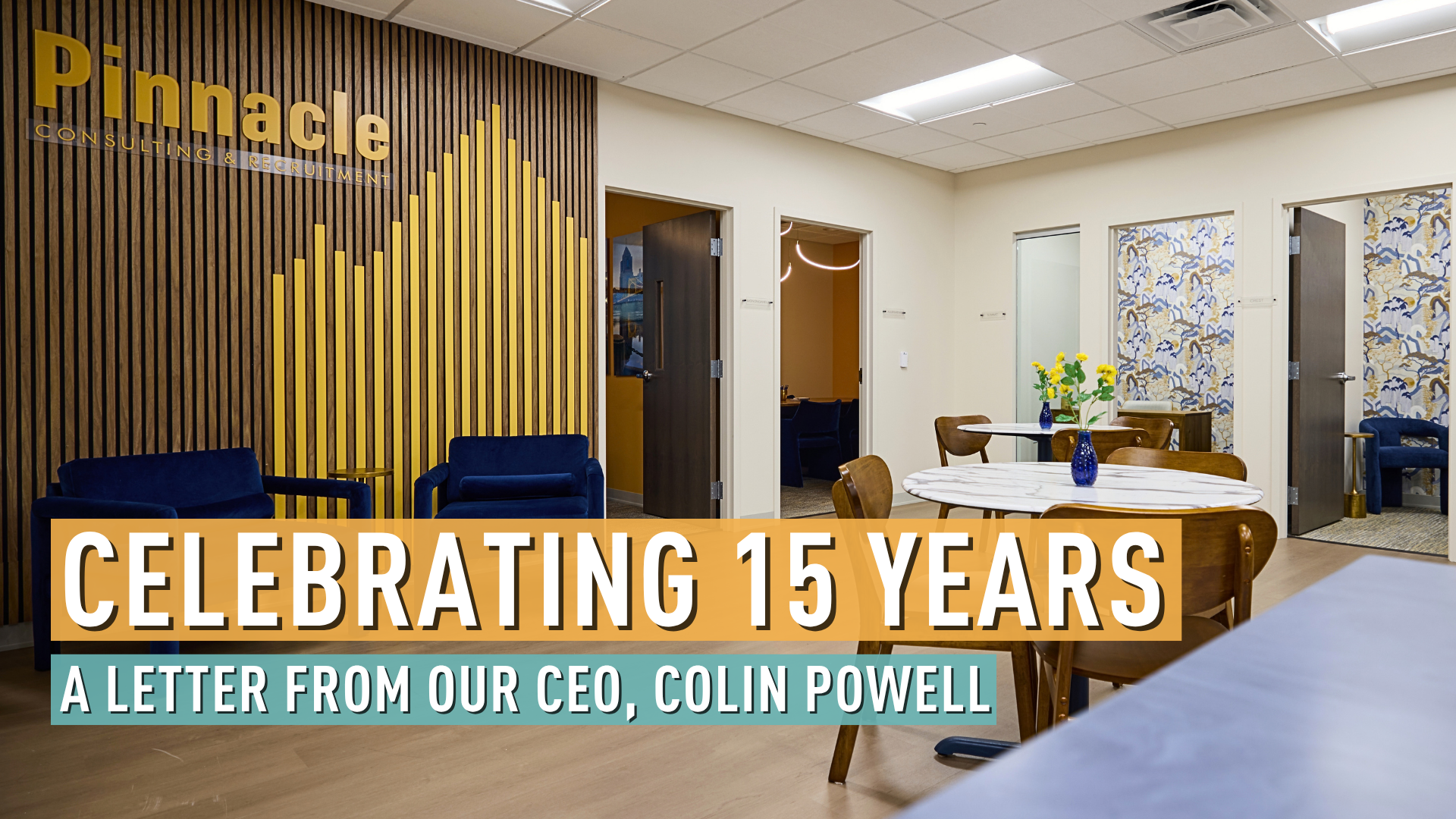
As Pinnacle celebrates 15 years, Founder and CEO Colin Powell reflects on the people, relationships and community that have shaped the company since 2011, and why those connections remain what he’s most proud of.

When a key employee leaves, organizations can lose much more than a person. Years of knowledge about processes, systems, relationships, and business decisions can leave with them. For accounting, finance, and IT leaders, protecting that knowledge is an important part of maintaining business continuity, especially as year-end approaches.

Hiring isn't always the problem. Many organizations have every position filled but still struggle to keep projects moving and workloads under control. Here's why capacity matters just as much as headcount, and what leaders can do before small challenges become bigger ones.






Explore our services and connect with us to see how we can support your hiring needs. Let Pinnacle help you build the team that drives your success!